Which AFL Teams Benefit Most From the New Ruck Rules in 2026?

The AFL's new ruck interpretation in 2026 aims to decrease body contact, shifting the focus from brute strength to timing and structured midfield plays. Teams such as Geelong and Brisbane might benefit due to their agile rucks and structured midfielders. Midfield play is now more crucial than ruck dominance, as illustrated by Carlton and Gold Coast's evolving strategies. Teams relying on physicality must adapt, while younger midfields, like North Melbourne's, could gain ground. Ultimately, the team that quickly adapts to these changes may have a competitive edge.
- AFL 2026 shifts focus from physical ruck battles to timing and midfield play.
- Geelong & Brisbane likely to benefit; teams like Carlton refocus on midfield depth.
- Quick adaptation to new rules may provide early competitive advantages.
True Footy AFL Podcast
Which AFL Teams Will Benefit Most From the New Ruck Interpretation in 2026?
The AFL’s new ruck interpretation heading into 2026 might look minor on paper, but it has the potential to reshape clearance battles across the competition.
- Which AFL Teams Will Benefit Most From the New Ruck Interpretation in 2026?
- Clean Tap Teams Could Gain Immediate Advantage
- Midfield Depth Matters More Than Ruck Dominance
- Physical Rucks May Need to Adapt
- Younger Midfields Could Close the Gap
- Adaptation Will Be the Early Edge
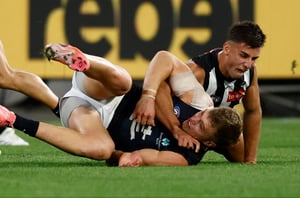
With tighter adjudication around body contact at stoppages, the heavy wrestling and subtle blocking that once defined ruck contests is being reduced. That shifts the contest away from brute strength and toward timing, leap and midfield structure.
Some teams are built for that. Others may need to adjust quickly.
Clean Tap Teams Could Gain Immediate Advantage
If ruck contests become cleaner and less physical before the ball is thrown up, athletic rucks with sharp timing become more valuable than pure grapplers.
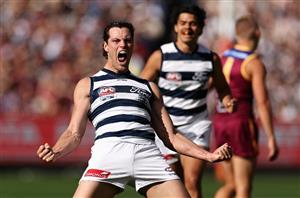
Geelong is one club that could benefit from this shift. The Cats don’t rely solely on overwhelming physicality at stoppage. Instead, their midfield balance with players like Max Holmes and Bailey Smith providing outside drive allows them to capitalise when the ball exits cleanly.
In a less chaotic environment, Geelong’s structure is likely to hold up.
Brisbane also fits that mould. With experienced midfielders returning to full fitness, the Lions don’t need messy stoppages to generate territory. Cleaner taps simply allow their system to operate as designed.
Midfield Depth Matters More Than Ruck Dominance
The new interpretation subtly shifts the focus away from the ruck as the central figure and toward the midfield group around him.
Carlton, for example, has built much of its identity around contested midfield strength. If centre bounces are less about wrestling and more about reaction time, the onus shifts to players at ground level. The Blues’ ability to win first possession and exit cleanly becomes more important than who wins the hit-out.
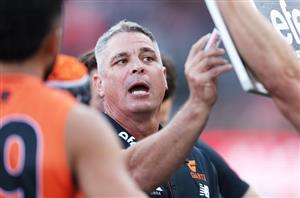
Gold Coast is another clear example. With Christian Petracca now driving the midfield and adding explosive power, the Suns don’t need to rely on pure ruck dominance. Cleaner stoppages only enhance the value of having elite clearance players ready to burst from the contest.
In this scenario, the ruck starts the play and the midfield decides it.
Physical Rucks May Need to Adapt
Teams that previously leaned into body contact at stoppage could feel the adjustment most.
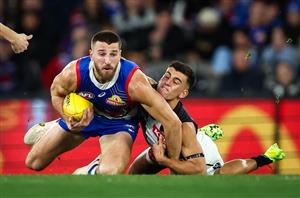
When umpires crack down on pre-contest grappling, it reduces the ability to manufacture repeat stoppages through sheer physicality. Rucks who relied on strength to control space must now win through positioning and craft.
That doesn’t eliminate their impact, but it narrows the margin for error. If a dominant physical ruck can’t dictate the body battle, the advantage quickly swings to the midfield.
For sides built around territory and repeat throw-ins, that’s a structural shift worth monitoring.
Younger Midfields Could Close the Gap
There’s another ripple effect here.
Younger midfields often struggle when stoppages become wrestling contests. Cleaner centre bounces level the playing field slightly and reward anticipation and spread.
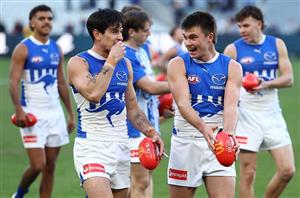
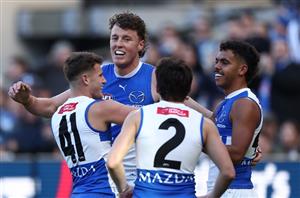
North Melbourne, building around George Wardlaw and Luke Davies-Uniacke, could benefit from that. Wardlaw’s physical presence remains vital, but cleaner contests allow his follow-up work and drive to shine rather than forcing constant body battles.
If North tightens its defensive structure behind the ball, the new interpretation could accelerate competitiveness rather than expose inexperience.
Adaptation Will Be the Early Edge
The biggest advantage won’t necessarily belong to the best ruckman. It will belong to the team that adapts fastest.
Early-season interpretation tends to fluctuate. The clubs that quickly identify how the contest is being officiated and adjust centre-bounce setups accordingly will gain territory before others settle.
In a competition where margins are thin, even a subtle shift in stoppage dynamics can swing games.
The 2026 ruck contest won’t just be about height and strength. It will be about timing, system and who reads the change first.
Related

Top Betting Sites
Betting offers
Upcoming Events
18 September 2026
- NFL 26/27 Week 2 -
- NFL
19 September 2026
- Roma vs Inter -
- Soccer
- Sydney Kings vs Cairns Taipans -
- Basketball
20 September 2026
- Nowra - September 20 -
- Horse Racing
- Bendigo - September 20 -
- Horse Racing
- New Zealand Breakers vs Illawarra Hawks -
- Basketball
- NRL Finals Week 2 -
- Rugby League
- New Zealand Warriors vs Newcastle Knights -
- Rugby League
- Zimbabwe vs Australia 3rd ODI -
- Cricket
- Celtic v Rangers -
- Soccer
- Atletico Madrid v Real Madrid -
- Soccer
Load More