As Group 1 Action Shifts West: Celebrating WA’s Turf Legends
Western Australia's racehorses have historically left an indelible mark on the national racing scene, with notable names like Blue Spec, Jolly Beggar, Eurythmic, and Northerly. These horses achieved fame for their victories in significant races such as the Melbourne Cup, Doncaster Handicap, and the W.S. Cox Plate. Many went on to have stellar careers in the eastern states, showcasing their capabilities against tough competition. Their stories highlight not only impressive racing achievements but also their breeding legacy. The horses from the 1990s through more recent years continue to be celebrated for their contributions to the sport.
- WA horses have historically achieved major wins both locally and in Melbourne
- Notable WA racehorses include Blue Spec, Jolly Beggar, and Eurythmic
- 1990s horses like Northerly continued the legacy of excellence in racing
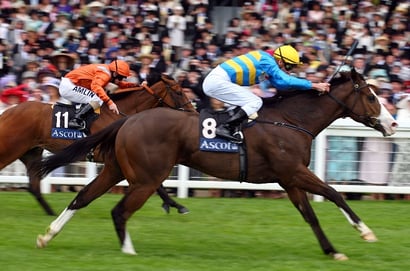
Scenic Blast winning the King’s Stand Stakes at Royal Ascot in 2009. (Getty)
As spring attention shifts from Melbourne to Perth and its wonderful summer carnival ahead, it is timely to look back at some of the great Western Australian horses who have made their presence felt across the country.
- A Jolly Success Story
- Two WFA Stars - Eurythmic And Easingwold
- Perth Form In Melbourne
- The 1990s - WA Horses Excelling
- The Fighting Tiger
The earliest-born member of the Western Australian Racing Hall of Fame, Blue Spec was foaled in 1899. Slow to fulfil his early promise — winning only once from his first 18 attempts in New South Wales — he was sold to Kalgoorlie businessman ‘Paddy’ Connolly. After winning his new owner’s hometown Cup (at that stage one of WA’s biggest races) and the Perth Cup, he was sent to Melbourne where, in 1905, he became the first Western Australian winner of the Melbourne Cup.
A Jolly Success Story
Foaled in 1906, Jolly Beggar is credited with winning on debut, though he was second past the post with the winner later disqualified for being a three-year-old running in a juvenile contest. At his next start he shared the prize with Blue Moon in the Karrakatta Plate — a race reported to be a particularly exciting contest, the pair going head-to-head down the straight with both hitting the lead at various stages. Jolly Beggar raced just three times at three, winning the WA Derby by six lengths before taking on older horses with a Perth Cup second.
He returned the following year to win that staying feature, becoming the first of only two horses (Eurythmic being the other) to win the Karrakatta Plate, Derby, and Cup before heading east to Melbourne and Sydney where he claimed several feature races, including the 1913 Doncaster Handicap and All-Aged Stakes. A close second in the Newmarket Handicap had many debating whether the judge made the wrong decision.
Crowned the state’s champion sire on seven occasions, Jolly Beggar also provides some interesting breeding trivia — his grandam was a half-sister to Melbourne Cup winner and four-time Australian Champion Sire Chester, from the same family that later produced modern star Chautauqua.
Two WFA Stars - Eurythmic And Easingwold
Still considered one of the two best horses to emerge from Western Australia, Eurythmic sadly did not get the chance to make his mark at stud, dying young. He is well remembered for a stellar racing career that saw him take his outstanding local form to the eastern states, where major wins included the Caulfield Cup, the Sydney Cup (charging late after striking severe interference), and three consecutive runnings of the Memsie Stakes.
He raced 30 times in weight-for-age company, winning 21 and finishing in the placings on another eight occasions. He earned a place not only in his home state’s Hall of Fame but also the national version, and his skeleton was later placed on display at the Western Australian Museum.
Born two years after Eurythmic, Easingwold was high class at two and three before venturing to Melbourne for the inaugural running of the W.S. Cox Plate, in which he finished second. He returned 12 months later to win the second edition.
He raced again in Western Australia in between and, like Blue Spec, also sits on the Kalgoorlie Gold Cup honour roll. A striking golden chestnut, Easingwold was known for toughness and versatility — winning a 1400m feature (the WA All-Aged Stakes) just two days after his Derby triumph.
Perth Form In Melbourne
Racing with great distinction in Perth in the early 1950s, Raconteur — who has a race named in his honour — enjoyed a varied career that included winning two Champion Thoroughbred Stallion titles at the Perth Royal Show while also claiming a feature race in Melbourne in 1955, the same year his first stakes winner was born.
Another eye-catcher was Nicopolis, a striking black horse foaled in 1959. Roy Higgins partnered him to victory in the 1965 Invitation (now the Sir Rupert Clarke Stakes), and the horse was Perth’s best three-year-old of his year, unbeaten at that age, later winning consecutive editions of the Toorak Handicap.
Another major success story for Roy Higgins was Ngawyni who, after a strong three-year-old season in Perth, transferred to the Bart Cummings stable. Cummings managed the horse’s troublesome feet superbly, with career highlights including wins in the 1977 Australian Cup and the AJC Queen Elizabeth Stakes.
The late 1980s saw an explosive galloper emerge from Western Australia — the brilliantly fast Placid Ark. After winning five of his first eight starts in Perth he headed to Melbourne, becoming the first of only two horses (Schillaci being the other) to win the Lightning Stakes, Oakleigh Plate, and Newmarket Handicap in the same campaign. More big wins followed before his career was tragically cut short by catastrophic injury at age five.
The 1990s - WA Horses Excelling
Several classy Western Australians starred in the east during the 1990s. Melbourne Cup hero Rogan Josh gave his school-teacher owner Wendy Green a fairytale result, while Starstruck managed to nose out Jeune when claiming the 1995 Australian Cup.
Palace Reign ploughed through heavy conditions to win the 1992 Caulfield Guineas, and the following year the Memsie and Feehan Stakes — an impressive effort considering he was the first horse down in that memorable 1992 W.S. Cox Plate.
The 1998 Karrakatta Plate formed part of a seven-race winning streak for the long-serving Bomber Bill, a horse the author regards as an all-time favourite. A remarkable sprinter able to mix it with the east’s best, Bomber Bill won three Group 1 races — the Karrakatta Plate, the Australia Stakes three years later, and the Goodwood Handicap at seven — along with five more stakes victories.
While Bomber Bill was in the midst of his career, another Perth horse was just beginning. After placing on debut in a three-year-old race at Ascot in March 2000, and winning three of his next four starts, he burst into national prominence later that year with a brilliant victory in the Group 1 Railway Stakes — the same mile feature run this Saturday.
The Fighting Tiger
That horse was, of course, the fighting tiger Northerly, winner of 19 of his 37 starts including successive W.S. Cox Plates and six other Group 1 races in Melbourne. Among those were Australian Cups in 2001 and 2003, and in between he finished second — beaten by another Railway Stakes-winning Perth galloper, Old Comrade.
The 2004 Victoria Derby was won by another Western Australian, Plastered, who outstayed the previous weekend’s W.S. Cox Plate winner Savabeel.
Miss Andretti, Scenic Blast, and Scenic Shot were outstanding Western Australian representatives later that decade, with the first two both winning the prestigious King’s Stand Stakes at Royal Ascot.
Betting offers
Upcoming Events
29 September 2026
- Spain v Croatia -
- Soccer
- Czechia v England -
- Soccer
30 September 2026
- ATP Tokyo - Japan Open -
- Tennis
- ATP Beijing - China Open -
- Tennis
- Balaklava - September 30 -
- Horse Racing
- Ballarat - September 30 -
- Horse Racing
- Doomben - September 30 -
- Horse Racing
- Rosehill - September 30 -
- Horse Racing
- Geraldton - September 30 -
- Horse Racing
- New Zealand Breakers vs Cairns Taipans -
- Basketball
- Dally M Medal 2026 -
- Rugby League
- Sydney Kings vs Brisbane Bullets -
- Basketball
- South Africa vs Australia 3rd ODI -
- Cricket
01 October 2026
- Warrnambool - October 1 -
- Horse Racing
- Tasmania JackJumpers vs Melbourne United -
- Basketball
Load More