Japanese F1 Grand Prix Statistics: Suzuka Records, Wins & Poles

The Japanese Grand Prix, held mainly at the legendary Suzuka Circuit, is one of Formula 1's most iconic races. Known for its strategic complexity, Suzuka remains a true driver's circuit due to its demanding layout, including the famed figure-eight track. Key highlights include the dramatic championship battles it has hosted and the notable drivers who triumphed here, such as Michael Schumacher and Lewis Hamilton. Suzuka's high pole-to-win conversion rate, low overtaking opportunities, and demanding tyre strategies make winning at this circuit a remarkable achievement.
- The Japanese GP, predominantly at Suzuka since 1987, is iconic for deciding titles.
- Michael Schumacher holds the most wins (6), with Suzuka demanding precision and rhythm.
- The circuit's high-speed corners make pole position and tyre management crucial.
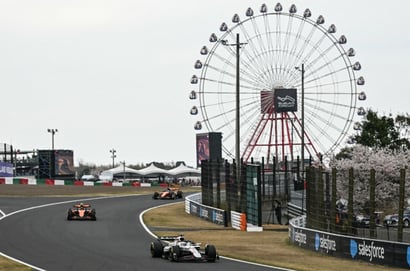
Japanese Grand Prix Statistics F1 (Photo by Toshifumi KITAMURA / AFP via Getty Images)
Japanese Grand Prix Statistics: Records, Wins, Poles and Suzuka F1 Trends
The Japanese Grand Prix is one of the most iconic races in Formula 1 history. Held primarily at the legendary Suzuka Circuit, it has played host to countless championship deciders, dramatic moments and some of the greatest drives the sport has seen.
- Japanese Grand Prix Statistics: Records, Wins, Poles and Suzuka F1 Trends
- When Was the First Japanese Grand Prix in Formula 1?
- What Makes Suzuka Circuit Unique?
- Who Has Won the Most Japanese Grand Prix Races?
- Most Wins at the Japanese Grand Prix
- Which Teams Have the Most Wins at Suzuka?
- Most Successful Teams
- Who Holds the Pole Position Record at Suzuka?
- Most Pole Positions
- How Important Is Pole Position at Suzuka?
- How Many Overtakes Happen at the Japanese Grand Prix?
- What Is the Fastest Lap at Suzuka?
- What Tyre Strategies Are Used at Suzuka?
- Why Is Suzuka So Demanding for Drivers?
From record wins and pole positions to overtaking trends and strategy patterns, the statistics behind the Japanese Grand Prix reveal why Suzuka remains one of the most respected circuits on the calendar.
When Was the First Japanese Grand Prix in Formula 1?
The Japanese Grand Prix first appeared on the Formula 1 calendar in 1976 at Fuji Speedway.
Key facts:
- First race: 1976 (Fuji)
- First Suzuka race: 1987
- Primary venue since: Suzuka Circuit
The 1976 race is remembered for its title-deciding showdown between James Hunt and Niki Lauda, while Suzuka later became synonymous with championship drama throughout the late 1980s and 1990s.
What Makes Suzuka Circuit Unique?
Suzuka is one of the few figure-eight circuits in Formula 1, making it completely unique.
Circuit statistics:
- Track length: 5.807 km
- Race distance: 53 laps
- Corners: 18 turns
- Circuit type: Permanent road course
Key features include:
- The Esses (Turns 3–7)
- Spoon Curve
- 130R, one of F1’s fastest corners
Suzuka is widely regarded as a true driver’s circuit, demanding precision, rhythm and commitment.
Who Has Won the Most Japanese Grand Prix Races?
Most Wins at the Japanese Grand Prix
- Michael Schumacher – 6 wins
- Lewis Hamilton – 5 wins
- Sebastian Vettel – 4 wins
Schumacher’s dominance came during Ferrari’s golden era, while Hamilton and Vettel both enjoyed strong runs during their respective peak periods.
Which Teams Have the Most Wins at Suzuka?
Most Successful Teams
- Ferrari
- McLaren
- Red Bull
Ferrari and McLaren dominated earlier eras, while Red Bull have been particularly strong in the modern era thanks to their aerodynamic efficiency.
Who Holds the Pole Position Record at Suzuka?
Most Pole Positions
- Michael Schumacher – 8 poles (Japan)
- Sebastian Vettel – multiple poles at Suzuka
- Lewis Hamilton – multiple poles
Pole position is highly valuable at Suzuka due to the circuit’s narrow layout and limited overtaking opportunities.
How Important Is Pole Position at Suzuka?
Suzuka has one of the highest pole-to-win conversion rates on the Formula 1 calendar.
Why pole matters:
- Limited overtaking zones
- High-speed corner sequences
- Track position critical for tyre management
Drivers starting on pole frequently convert that advantage into victory, especially in dry races.
How Many Overtakes Happen at the Japanese Grand Prix?
Suzuka is traditionally a low-overtaking circuit.
Typical trends:
- Fewer overtakes than average
- Most passes occur into the final chicane
- DRS plays a smaller role than at power circuits
Recent races have seen around 15–20 overtakes, significantly lower than circuits like China or Bahrain.
What Is the Fastest Lap at Suzuka?
The official race fastest lap record at Suzuka is:
- Lewis Hamilton – 1:30.983 (2019)
Qualifying lap times typically fall into the 1:26–1:28 range depending on regulation cycles.
What Tyre Strategies Are Used at Suzuka?
Despite the circuit’s high-speed nature, Suzuka often produces one-stop races.
Why:
- Limited overtaking reduces aggressive strategy
- High tyre wear balanced by track evolution
- Teams prioritise track position over flexibility
However, tyre degradation remains significant due to the long, fast corners.
Why Is Suzuka So Demanding for Drivers?
Suzuka tests every aspect of a driver’s skillset.
Key challenges:
1. High-speed corner commitment
Drivers must maintain precision through flowing sequences like the Esses.
2. Tyre management
Front tyres take heavy punishment across multiple corners.
3. Risk vs reward
Grass and gravel punish even small mistakes.
4. Rhythm
Suzuka rewards drivers who can maintain consistent flow across the lap.
Top Betting Sites
Betting offers
Upcoming Events
16 September 2026
- Belmont - September 16 -
- Horse Racing
- Launceston - September 16 -
- Horse Racing
- Happy Valley - September 16 -
- Horse Racing
- Viettel FC vs Melbourne Victory -
- Soccer
- AC Milan v Benfica -
- Soccer
- Sunderland vs AZ Alkmaar -
- Soccer
- Man United vs Brighton -
- Soccer
- Marta Kostyuk vs Taylor Townsend -
- Tennis
17 September 2026
- Mornington - September 17 -
- Horse Racing
- Kembla Grange - September 17 -
- Horse Racing
- Adelaide United vs Tai Po -
- Soccer
18 September 2026
- Sydney Swans vs Fremantle Dockers Preliminary Final -
- AFL
Load More