10 Incredible Chinese Grand Prix Statistics Every F1 Fan Should Know

The Chinese Grand Prix, held at the Shanghai International Circuit since 2004, is renowned for its thrilling races. Lewis Hamilton leads with six victories, making him the most successful driver at the event. The circuit, inspired by the character 'Shang', features one of F1's longest straights, encouraging overtaking. Strategic decisions, influenced by factors like tyre degradation and safety cars, often determine race outcomes. From pivotal championship moments to memorable overtakes, the Chinese Grand Prix continues to be a vital fixture in the F1 calendar.
- Lewis Hamilton holds the record for most wins at the Chinese GP with six victories.
- Shanghai features one of F1's longest straights, promoting exciting overtakes.
- The track layout was inspired by the Chinese character 'Shang'.
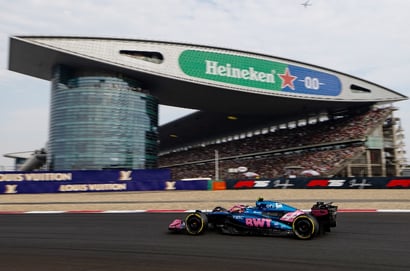
Shanghai International Circuit F1 Statistics. (Photo by Kym Illman/Getty Images)
10 Incredible Chinese Grand Prix Statistics Every F1 Fan Should Know
The Chinese Grand Prix has delivered some of Formula 1’s most memorable races since joining the calendar in 2004. Held at the Shanghai International Circuit, the race combines a technical layout with long straights that create overtaking opportunities and strategic unpredictability.
- 10 Incredible Chinese Grand Prix Statistics Every F1 Fan Should Know
- 1. Lewis Hamilton Is the Most Successful Driver in China
- 2. The Chinese Grand Prix Debuted in 2004
- 3. The Shanghai Circuit Features One of F1’s Longest Straights
- 4. The Track Layout Was Inspired by the Chinese Character “Shang”
- 5. Turn 1 Is One of the Most Unique Corners in Formula 1
- 6. Mercedes Dominated the Hybrid Era in China
- 7. Overtaking Is Common at the Chinese Grand Prix
- 8. Strategy Often Decides the Race
- 9. The Circuit Is One of the Longest on the Calendar
- 10. The Chinese Grand Prix Has Produced Several Championship Moments
- Why the Chinese Grand Prix Is One of F1’s Most Fascinating Circuits
From Lewis Hamilton’s dominance to the circuit’s unique spiral corners, here are ten fascinating statistics that define the Chinese Grand Prix.
1. Lewis Hamilton Is the Most Successful Driver in China
Lewis Hamilton holds the record for the most wins at the Chinese Grand Prix with six victories.
His wins came in:
2008, 2011, 2014, 2015, 2017, 2019
Hamilton’s success at Shanghai helped establish the circuit as one of his strongest tracks on the Formula 1 calendar.
2. The Chinese Grand Prix Debuted in 2004
Formula 1 first raced in China in 2004, making it one of the newest long-term venues on the calendar.
The inaugural race winner was Rubens Barrichello driving for Ferrari, who also started from pole position.
3. The Shanghai Circuit Features One of F1’s Longest Straights
The back straight between Turns 13 and 14 measures approximately 1.2 kilometres, making it one of the longest straights in Formula 1.
This straight is a key overtaking zone thanks to:
- DRS activation
- Slipstreaming
- Heavy braking into Turn 14
4. The Track Layout Was Inspired by the Chinese Character “Shang”
The Shanghai International Circuit was designed by Hermann Tilke and is widely believed to resemble the Chinese character “上” (Shang), which means “above” or “ascend”.
The circuit includes 16 corners and stretches over 5.451 km.
5. Turn 1 Is One of the Most Unique Corners in Formula 1
The opening corner at Shanghai is a long, tightening right-hander that feeds into several more turns.
Drivers enter at high speed before gradually tightening their steering input, placing enormous stress on the front tyres.
This corner sequence is often one of the biggest tyre management challenges of the race.
6. Mercedes Dominated the Hybrid Era in China
Since the start of Formula 1’s hybrid era in 2014, Mercedes have been the most successful team at the Chinese Grand Prix.
Their dominance was driven largely by:
- Strong power unit performance
- Superior energy deployment
- Lewis Hamilton’s exceptional record at the circuit
7. Overtaking Is Common at the Chinese Grand Prix
Shanghai is considered a good overtaking circuit compared to many modern Formula 1 tracks.
Key reasons include:
- The long back straight
- Heavy braking zones
- Strategic tyre differences
Recent races have produced 30 or more overtakes, highlighting the circuit’s racing potential.
8. Strategy Often Decides the Race
The Chinese Grand Prix frequently becomes a strategic contest between teams.
Common factors influencing strategy include:
- Tyre degradation
- Undercut opportunities
- Safety car timing
Teams often switch between one-stop and two-stop strategies depending on tyre wear and race interruptions.
9. The Circuit Is One of the Longest on the Calendar
At 5.451 km, Shanghai is one of the longer circuits used in Formula 1.
The Grand Prix itself runs for 56 laps, covering a race distance of just over 305 kilometres.
This length contributes to the circuit’s diverse mix of high-speed straights and technical corners.
10. The Chinese Grand Prix Has Produced Several Championship Moments
Shanghai has often played a role in deciding or shaping the Formula 1 championship.
Memorable moments include:
2007 – Lewis Hamilton famously slid into the pit entry gravel while leading the championship
2018 – Daniel Ricciardo stormed through the field to win after a late safety car
2019 – The race hosted Formula 1’s 1000th Grand Prix
These moments helped cement the Chinese Grand Prix as a historically significant race.
Why the Chinese Grand Prix Is One of F1’s Most Fascinating Circuits
From technical corners and long straights to strategic battles and championship drama, the Chinese Grand Prix remains one of the most complex races on the Formula 1 calendar.
The statistics highlight just how unique the Shanghai International Circuit is and why it consistently produces entertaining racing.
Related

Top Betting Sites
Betting offers
Upcoming Events
16 September 2026
- Belmont - September 16 -
- Horse Racing
- Launceston - September 16 -
- Horse Racing
- Happy Valley - September 16 -
- Horse Racing
- Viettel FC vs Melbourne Victory -
- Soccer
- AC Milan v Benfica -
- Soccer
- Sunderland vs AZ Alkmaar -
- Soccer
- Man United vs Brighton -
- Soccer
- Marta Kostyuk vs Taylor Townsend -
- Tennis
17 September 2026
- Mornington - September 17 -
- Horse Racing
- Kembla Grange - September 17 -
- Horse Racing
- Adelaide United vs Tai Po -
- Soccer
18 September 2026
- Sydney Swans vs Fremantle Dockers Preliminary Final -
- AFL
Load More