Australian Grand Prix Stats: Records, Safety Cars & Trends

The Australian Grand Prix, held at Albert Park, is known for its unpredictable and thrilling nature. The event stands out due to its chaotic race starts, frequent safety car interruptions, and low pole position conversion rates. Drivers face a tough test with high retirement rates and variable weather conditions. Notable statistical moments highlight its dramatic reputation as competitors navigate a challenging circuit with fast speeds and limited overtaking opportunities. Even seasoned teams like Ferrari, McLaren, and Mercedes find there's no guaranteed path to victory, making it a must-watch event in the F1 calendar.
- Unpredictable race with chaotic starts and frequent safety cars.
- High retirement rates and weather variability pose challenges.
- Albert Park's unique layout offers limited overtaking but fast speeds.
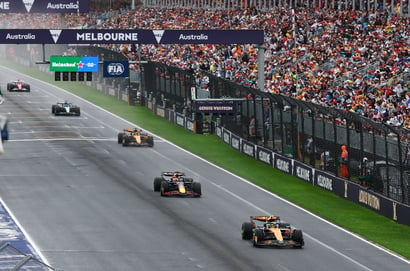
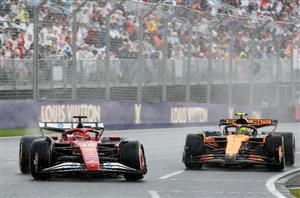
Australian Formula 1 GP Stats & Records (Photo by Clive Rose/Getty Images)
Australian Grand Prix Statistics: Records, Wins, Poles & Key Trends
The Australian Grand Prix has built a reputation as one of Formula 1’s most unpredictable and dramatic events. Whether it’s season-opening chaos, strategic gambles or sudden weather shifts, Melbourne consistently delivers headlines.
- Australian Grand Prix Statistics: Records, Wins, Poles & Key Trends
- Australian Grand Prix History Overview
- Most Successful Drivers at the Australian Grand Prix
- Most Wins (All-Time)
- Most Successful Teams
- Most Wins at Albert Park
- Pole Position & Conversion Rate
- Safety Car & Red Flag Trends
- Retirement Rate
- Overtaking Trends
- Tyre Strategy Patterns
- Fastest Lap & Speed Characteristics
- Notable Statistical Moments
- Why the Australian Grand Prix Defies Predictability
- The numbers reveal a clear pattern:
But beyond the spectacle lies a fascinating statistical profile.
From win records and pole conversion rates to safety car frequency and retirement trends, here’s a complete statistical breakdown of the Australian Grand Prix.
Australian Grand Prix History Overview
- First held: 1985 (Adelaide)
- Moved to Melbourne: 1996
- Circuit: Albert Park Grand Prix Circuit
- Race distance: 58 laps (5.278 km layout)
- Circuit type: Semi-permanent street circuit
The Adelaide era (1985–1995) delivered title deciders and chaos. Since moving to Albert Park in 1996, the race has more often served as the season opener, adding unpredictability to an already challenging venue.
Most Successful Drivers at the Australian Grand Prix
Most Wins (All-Time)
Michael Schumacher – 4
Jenson Button – 3
Sebastian Vettel – 3
In the Melbourne era specifically, Schumacher and Vettel were particularly dominant during peak Ferrari and Red Bull periods.
The race has rarely belonged to one driver long-term. Unlike Monaco or Hungary, Melbourne doesn’t produce extended dynasties.
Most Successful Teams
Most Wins at Albert Park
- Ferrari
- McLaren
- Mercedes
Ferrari have historically performed strongly in Melbourne, often starting seasons with competitive packages. Mercedes dominated the hybrid era at Albert Park between 2014 and 2019.
Pole Position & Conversion Rate
Pole position in Melbourne does not guarantee victory.
Historically, the pole-to-win conversion rate at Albert Park sits around 40–45%, lower than circuits like Monaco or Monza.
Why?
- High probability of Safety Cars
- First-corner incidents
- Strategy variance
- Wather volatility
Several winners have come from outside the front row, particularly when chaos unfolds at Turn 1.
Safety Car & Red Flag Trends
Albert Park has a strong history of race interruptions.
Key trends:
- Safety Cars are common
- Multiple red flags have occurred in recent years
- Opening lap incidents are frequent
The combination of tight racing lines, limited run-off in certain sections, and early-season aggression contributes heavily to interruptions.
In recent seasons, Melbourne has produced some of the highest incident counts per race on the calendar.
Retirement Rate
The Australian Grand Prix often sees above-average retirements compared to mid-season races.
Reasons include:
- First race mechanical failures
- Limited preseason mileage
- Aggressive opening lap battles
- Changing track conditions
In regulation change years, retirement rates historically spike as teams push new reliability limits.
Overtaking Trends
Albert Park has evolved.
Following layout changes introduced in 2022:
- Corner speeds increased
- One DRS zone was adjusted
- Overtaking opportunities improved
However, track position remains critical.
Qualifying inside the top six significantly increases podium probability. Clean air remains a major performance advantage.
Tyre Strategy Patterns
Melbourne strategy has varied depending on conditions.
Common themes:
- One-stop strategies often viable in dry conditions
- Safety Cars can trigger opportunistic two-stoppers
- Weather has heavily influenced outcomes in multiple editions
The circuit’s medium tyre degradation and limited abrasive surface allow for flexible strategies, provided interruptions don’t reshape the race.
Fastest Lap & Speed Characteristics
Albert Park is deceptively fast.
- Over 70% of the lap is spent at full throttle
- Limited heavy braking zones
- High top-speed traps into Turn 1
This creates unique energy management demands, particularly under modern power unit regulations.
Pole lap times typically fall into the low 1:15 to 1:16 range depending on regulation cycles.
Notable Statistical Moments
1996: Multiple-car Turn 1 crash in first Melbourne race
2002: Eight-car accident at the start
2009: Brawn GP shock victory
2023: Multiple red flags in closing laps
Several races decided by less than five seconds
Melbourne rarely delivers processional wins. Statistical volatility is part of its DNA.
Why the Australian Grand Prix Defies Predictability
The numbers reveal a clear pattern:
- Lower-than-average pole conversion
- Frequent Safety Cars
- High retirement probability
- Strong influence of first-lap positioning
- Regulation-year volatility
Melbourne is not simply a fast parkland circuit. It is a strategic and mechanical stress test layered with early-season unpredictability.
And that is exactly why it continues to stand as one of Formula 1’s most compelling statistical outliers.
Top Betting Sites
Betting offers
Upcoming Events
16 September 2026
- Belmont - September 16 -
- Horse Racing
- Launceston - September 16 -
- Horse Racing
- Happy Valley - September 16 -
- Horse Racing
- Viettel FC vs Melbourne Victory -
- Soccer
- AC Milan v Benfica -
- Soccer
- Sunderland vs AZ Alkmaar -
- Soccer
- Man United vs Brighton -
- Soccer
- Marta Kostyuk vs Taylor Townsend -
- Tennis
17 September 2026
- Mornington - September 17 -
- Horse Racing
- Kembla Grange - September 17 -
- Horse Racing
- Adelaide United vs Tai Po -
- Soccer
18 September 2026
- Sydney Swans vs Fremantle Dockers Preliminary Final -
- AFL
Load More