Doncaster Handicap History - The Fillies Who Conquered the Famous Mile
The Doncaster Handicap, one of Australia's most prestigious equestrian contests, has witnessed some of the most memorable performances by three-year-old fillies over its rich history. Horses like Sunline, who claimed victory in 1999 and again later, and Emancipation, the 1983 champion, exemplify the young talent that has graced this race. These fillies, often underestimated, have demonstrated exceptional prowess against experienced competitors. While some like Skating and Magic Flute have enjoyed successful racing careers, others have left lasting legacies through their progeny, shaping the racing lineage for years to come.
- A look at the rare three-year-old fillies who have won the Doncaster Handicap
- Featuring champions like Sunline, Emancipation and Skating
- There’s more than a century of Doncaster history at Randwick
- Sunline remains the last filly to win in 1999
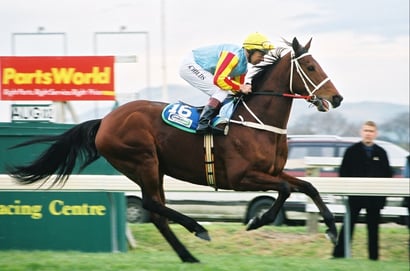
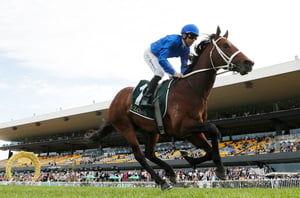
Sunline was the last three-year-old filly to win the Doncaster Handicap. (Getty)
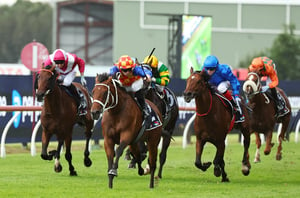
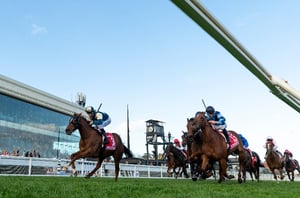
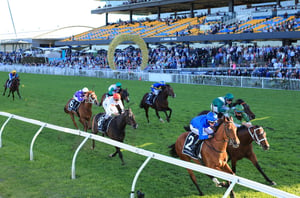
With the flying Sheza Alibi favourite to take out Saturday's $4 million Group 1 Doncaster Handicap, we thought it timely to take a look at some of the wonderful three-year-old fillies who have contested Australia's biggest 1600m contest.
Only five years younger than the Melbourne Cup, the Doncaster Mile boasts a rich history, with so many great gallopers on its honour roll — the likes of Wakeful, Chatham, Tobin Bronze, Gunsynd, Maybe Mahal, Emancipation, Super Impose, Winx and Mr Brightside providing racegoers with so many good memories.
As have these outstanding young lasses, the 11 three-year-old fillies to have won the Doncaster...
Sunline
The most recent three-year-old female Doncaster winner (and she returned three years later to win it again), it was at her 12th outing that this star New Zealander from the family of Phar Lap took on a field of tough, older campaigners in 1999.
She had only once tasted defeat in the lead-up and at that stage had just the one Group 1 feature on her record, and that against her own age and sex — the 1998 Flight Stakes.
Bookies were pretty keen to take her on in the Doncaster, but she firmed into 10/9 and it was clear pretty early in the race that punters had it right.
Easily finding the lead from an outside gate, Sunline with Larry Cassidy aboard was clear turning and never in any danger of defeat, with her rider declaring that "she is the best there is right now and potentially one of the best ever."
"I've always known she was good, but now I think she's a champion," co-trainer Stephen McKee declared, adding that the stable had in mind for her the W.S. Cox Plate, which she would of course win — that year and the next.
Those races were amongst her 13 elite-level victories and, looking back, her loyal strapper and track rider Claire Bird is still in awe.
"At the time of her first Doncaster I was probably a bit underwhelmed in regards to what it actually meant. I knew it was a big deal, but it took a wee bit longer to know what she’d actually accomplished!"
"Her whole career was a bit like that; it was different living in it than witnessing it. I kind of wish I’d been a bit older and I would have appreciated it more. Not that I didn’t, I just would have had more respect for her accomplishments."
Claire's confidence levels were high leading into Sunline's first Doncaster, laughing as she said, "I was only in my early twenties and was a bit bulletproof… I didn’t even know the prestige of this handicap!"
What she did know, however, was that Sunline was "just a bit of a machine and so fast."
"I can honestly say I’ve never ridden anything like her. She just did it so easily and felt like she was going slow when she was going super fast."
"She was so tough," Claire continued. "She was never scratched from a race and she travelled overseas, taking on the world on their home turf."
Claire has a smaller but lovely link with another Doncaster winner, another great of the Australian turf — recalling that in early 2015, whilst working for Gerry Harvey, she helped out a visiting stable to Queensland.
That being Chris Waller.
Meaning that Claire Bird has been on the backs of Sunline... and Winx!
Skating
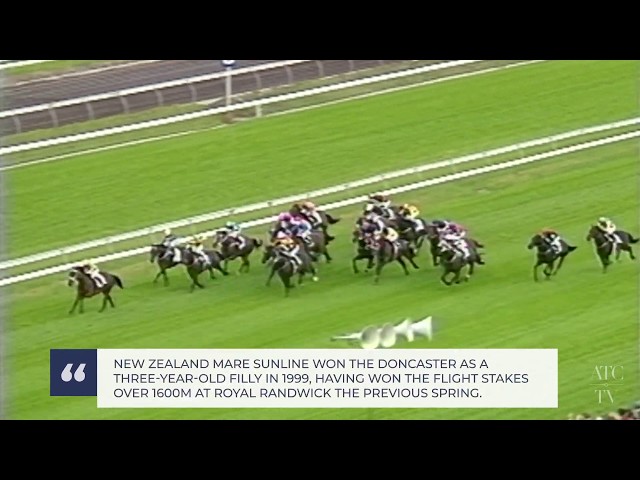
Six years before Sunline's all-the-way Doncaster win, another in-form filly was taking on a big field of more seasoned campaigners.
The year before, Soho Square gave young rider Paddy Payne his first taste of Group 1 success and that horse was again tackling the race in 1993, this time settling for second behind the Graeme Rogerson-trained Skating.
Winning in front of a Doncaster crowd that was the biggest since 1979, she was cheered home by many of those there to see the horses she defeated, namely the popular gallopers Schillaci and Naturalism (both unplaced).
Grant Cooksley was aboard Skating and he was full of praise for the heart shown by his mount.
"Soho Square was going to beat me but as soon as my horse saw him she started to kick back."
It was a fourth win in a row for the daughter of the Melbourne Cup winner At Talaq, Skating having also taken out the Group 3 Light Fingers Stakes, the Group 2 Surround Stakes and the Group 1 Winfield (now Coolmore) Classic.
The Doncaster would be the last of Skating's seven victories and she went on to a very successful stud career, producing the stakes winners Bradbury's Luck, Murtajill and Sunset Run.
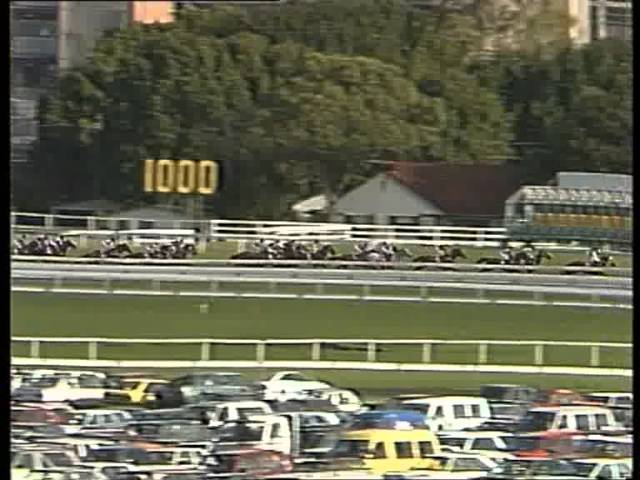
Magic Flute
The best of the seven stakes winners sired by the remarkable Adraan (sire of just 23 foals — 22 runners, 20 winners), Magic Flute had a busy early career, with her Doncaster victory at three coming at the third-last of 18 starts.
The previous year's Group 1 1000 Guineas winner, Magic Flute was ridden at Randwick by a 20-year-old having his first ride in the big race — Shane Dye.
And she provided her in-form trainer Brian Mayfield-Smith (who'd won the Golden Slipper with Marauding the week before) with his first Group 1 quinella, Magic Flute holding off a late charge by her stablemate Colour Page.
Much to her trainer's delight, he admitted that he had not been confident during the race... "I sold out three furlongs from home, I thought she had Buckley's chance, but Shane knew he was riding a race-fit filly with a nice weight and when she commenced her run in the final 200 metres I was a most relieved man!"
Going on to win the Group 2 Queensland Guineas, Magic Flute did not have a great deal of luck at stud and left no fillies to continue her line.
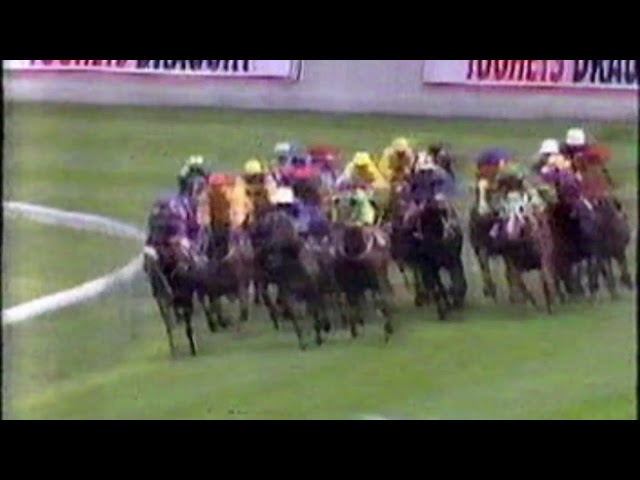
Emancipation
In regard to lasting impact, it was a different story for the 1983 Doncaster winner Emancipation — the champion mare who inherited her distinctive grey coat from another Doncaster-winning star, her damsire Gunsynd.
Both horses were favourites in the Doncaster, with no other of the most fancied runners successful in between.
The dam of the Group 2 galloper Royal Pardon, Emancipation is still making her presence felt as ancestress of another 25 stakes winners, including the big race winners Railings, Virage de Fortune, Rumya, Stratum Star and Apocalyptic.
The winner of 19 of her 28 starts, the Neville Begg-trained temperamental mare fondly known as "Mildred" won the Doncaster at her 12th start.
It was the second of her six big race wins, having defeated Manikato in the Group 1 George Ryder Stakes at her previous outing.
"Randwick racegoers hailed a new champion," journalist Bert Lillye declared the next day.
"Cheering and clapping burst from the stands when the grey filly raced to the lead halfway up the straight and careered away to a most convincing victory."
Analie
Analie made 1973 a memorable year for her connections, racing 16 times between March and October — winning 11 races, with her Doncaster success (the fourth for trainer Tommy Smith) the first of her four consecutive victories in races now classified as Group 1s.
A week after the Doncaster she stepped up to the 2400m of the AJC Oaks before venturing to Brisbane to win the Queensland Oaks one Saturday and the Queensland Derby the next.
Two unplaced runs followed before another winning streak of five, and by the time she retired she had won 16 of her 39 starts.
And she beat a pretty good one in the Doncaster, with a close finish having jockey Ron Quinton thinking that he had been outbobbed by Roy Higgins aboard the outstanding galloper (and stallion) Century.
"I hit the lead about 100 yards from the winning post but thought that Century had just got up in the last stride to beat me."
Quinton was on a high that day, having also won a feature (the Australasian Champion Stakes, now known as the Spring Champion) aboard Gold Brick.
"I never in my wildest dreams thought that I would ride the winner of the two big races here at Randwick today, it was a terrific thrill."
At stud, Analie was represented by another big race winner, with her daughter Aare taking out the 1980 Group 1 Blue Diamond Stakes.

Citius
The fourth of Star Kingdom's Doncaster winners and possibly that legendary stallion's best daughter, Citius won nine of her 29 starts, with her other three Group 1 victories coming over shorter trips — the VRC Sires' Produce Stakes, the Oakleigh Plate and the Lightning Stakes (in record time).
The first filly to win the Doncaster in four decades, the Bill Murrell-trained Citius was ridden by George Moore, replacing her regular rider Peter Gumbleton.
From barrier 18 he had her just off the leaders, in striking distance throughout — her winning margin three-quarters of a length.
Dam of the stakes winner Consenting, Citius was a filly with considerable speed, which her trainer had tried to hide early days in the hope of getting odds, with well-known clocker Joe O'Brien telling the story of the day Murrell locked the gates at Mentone so that nobody could get in to see how well she was working.

Valicare
At the time (1926), the shortest-priced (5/4 on) Doncaster winner, saluting in near-record time with a record weight for a three-year-old filly (55kg), Valicare was some horse — unbeaten at three; overall winning half of her 18 starts.
A daughter of five-time Australian Champion Sire Valais (also sire of such champs as Manfred and Heroic), the Bayly Payten-trained Valicare had thrashed the star galloper Windbag in the Rawson Stakes at her previous outing and she would go on to win the All-Aged Stakes, the Hill Stakes and, in Melbourne, the now-defunct C.M. Lloyd Stakes.
Also the winner of the Adrian Knox Stakes, which morphed into the ATC Oaks, Valicare was a successful broodmare, her daughters Siren (VRC Oaks) and Care Free (Cantala Stakes) winning feature events, with the latter producing the stakes winners Freedom and Royal Sceptre.
The Others
Four other three-year-old fillies have the Doncaster on their resume: Lochano (1912), Rose Petal (1903), Queensland (1880 — a filly whose grandam was a half-sister to the remarkable Fisherman, winner of 70 races before a successful stud career) and Vixen (1872).
And we'd better give special mention to the marvel that was Briseis — winner, with 35kg, of the Doncaster at two!

Betting offers
Upcoming Events
29 September 2026
- Tatura- September 29 -
- Horse Racing
- Grafton - September 29 -
- Horse Racing
- Australia vs Brazil - Game 2 -
- Soccer
- Alejandro Davidovich Fokina vs Hubert Hurkacz -
- Tennis
- Daniil Medvedev vs Andrey Rublev -
- Tennis
- Spain v Croatia -
- Soccer
- Czechia v England -
- Soccer
30 September 2026
- ATP Tokyo - Japan Open -
- Tennis
- Rosehill - September 30 -
- Horse Racing
- New Zealand Breakers vs Cairns Taipans -
- Basketball
- Dally M Medal 2026 -
- Rugby League
- Sydney Kings vs Brisbane Bullets -
- Basketball
- South Africa vs Australia 3rd ODI -
- Cricket
03 October 2026
- Flight Stakes -
- Horse Racing
- Turnbull Stakes -
- Horse Racing
- Epsom Handicap -
- Horse Racing
Load More